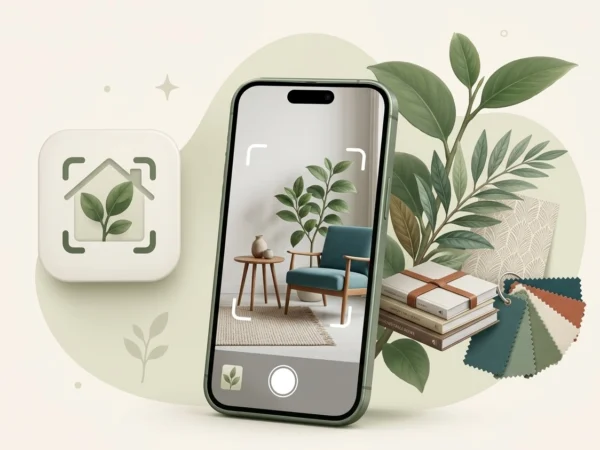
We often see a sofa, armchair or whole living room and feel that the piece “works”, but can’t name the style. The service helps you find furniture style from a photo: upload a snapshot and get the direction, a harmony score and tips on what to add to the interior. No need to scroll through catalogues or learn the terms — one clear shot is enough.
How to determine furniture style from a photo
The analysis relies only on what is visible in the image. It looks at the silhouette, the shape of legs and armrests, finishes, materials, upholstery and colour. These features form the style: Scandinavian, mid-century, japandi, loft, classic, art deco or modern minimalism. If several directions are mixed in the frame, you will see it straight away — for example, “a mix of Scandinavian style and loft”.
What you can upload
A photo of a single item (armchair, table, chest of drawers) or a room with several pieces of furniture will work. The better the light and the fewer objects hidden behind others, the more accurate the result. It is best to shoot at eye level so proportions are not distorted.
What you get as a result
The answer is short and structured:
- Score from 0 to 10. Shows how well the furniture comes together in a single style. Calculated on five criteria: style unity, scale and proportions, material harmony, colour harmony, condition and finish.
- Style name with a short explanation of why this conclusion was reached.
- Your type — a short name for the character of your furniture that is easy to show friends.
- Unexpected nuance — a detail people usually miss: the shape of a leg, a clash of materials or a proportion.
- What works together — three things worth adding, with material, shade and approximate size.
- What to avoid and a tip on palette and textures.
Matching furniture in one style: what to pay attention to
Materials and textures
Wood, metal, glass, fabric and leather can coexist if there are not too many of them and they repeat around the room. The service will show which material dominates and which one stands out.
Colour and balance
A restrained palette of two or three shades is usually enough for a room to look cohesive. The analysis will suggest which colours are worth repeating in the décor so that furniture and textiles “talk” to each other.
Scale and proportions
A massive sofa in a small room or overly thin legs next to a heavy table destroy the harmony. The ratio of sizes is taken into account and advice is given on what will balance the composition.
Who can benefit from furniture style analysis
It is useful when you are buying new furniture and want it to match the old, setting up a home from scratch, rearranging a room or looking for décor ideas. A quick way to get your bearings in styles before going to a store or ordering on a marketplace. It does not replace a designer’s consultation for complex projects.
Furniture style and interior design: what is the difference
Furniture style describes individual pieces: shape, material and finish. Interior design covers the whole room: layout, light, wall and floor colour. So it is useful first to understand which direction your sofa or table belongs to, and only then choose curtains, a rug and lighting. This order saves budget and helps avoid purchases that “don’t fit” the overall picture.
How to use the result in practice
Save the named style and palette, then look for décor and extra furniture by these features. Focus on the three recommended items, check their size on site and run the analysis again after changes — this shows how the score has grown.
Frequently asked questions about determining furniture style
How accurate is the result?
It is an assessment based on visual features. It helps understand the direction and find weak spots, but it is not an expert conclusion and does not take into account sizes that are not visible in the photo.
Do I need to specify anything extra?
No. A photo is enough. If you wish, you can check the result from another angle or after adding a new item: the score and recommendations may change.
How many times can I check?
You can use it every day within the check limit. If the limit is reached — try again the next day.